Showing posts with label inspections. Show all posts

Wednesday, August 31, 2011

HOW TO CHOOSE A CONTRACTOR


Choosing a Contractor

Even if you’re an avid DIY'er, you’ll eventually need a job done that’s just too big or complex to tackle by yourself.  That’s when you hire a contractor.  But how do you know you’re getting the best deal? Well, first, make sure you follow all the time-honored advice, such as asking friends and family to recommend a contractor, making sure you hire someone you’re comfortable with, and verifying that the contractor has been in business for a a considerable period of time, and has liability and worker’s compensation insurance. Then when you meet with your contractors to discuss the job, you should ask these questions to be confident that you’re getting the most for your remodeling dollar.

Earlier this month, I was called in to a home in Sacramento to complete a pre-listing home inspection. I was surprised when I found that the crawlspace showed signs of having been recently worked on. When I asked the homeowner about it, I was told that they had needed to  call in a second contractor when the first contractor hadn’t performed the work to the quality they’d hoped for. 

Unfortunately, this kind of story is becoming a more common occurrence. 
We at AJAX Home Inspections urge you to consider the following before you sign the contract...

Consider Credentials
AJAX Home Inspections recommends considering contractors who:

  • Are licensed through the state board, and/or who has a license specifically for the work being completed on your home.
  • Are associated with relevant organizations for the industry, such as the Building Performance Institute or Energy Star
  • Have a number of years of experience in the industry.  It’s true that everyone has to start somewhere, but don’t feel as if you need pay to provide for rookie contractors to learn on your home.
  • Request a Certificate of Insurance mailed directly to you from the contractor’s insurance carrier.

Get References

AJAX Home Inspections recommends that you:
  • Get references from other homeowners you know or trust. Ask friends, family or neighbors who have had similar work done on their homes.
  • Do your research.  Online review sites such as Angie’s List or Yelp can help you weed out troublesome contractor. A series of negative reviews may be a warning sign, as is the complete absence of reports (which might indicate the contractor hasn't been in business long).
  • Ask the contractor for at least 4-6 references from previous clients, and be diligent about following up with the former clients about their satisfaction level with the completed job.

Get Detailed Quotes
AJAX Home Inspections recommends that a detailed quote should include:

  • Reference material so you can research the products and systems being proposed.
  • The payment terms and timeline. For example, you may pay 50% up front for materials and the remainder when work is complete, and timeline of the work proposed so you can plan accordingly..
  • The name and contact information of the person who is in charge of your project onsite, to ensure that you know who you’re letting into your home, and who to get in touch with if things go wrong. If this isn’t provided with the quote, you should ask for this prior to work commencement.
  • The detailed work that’s going to be completed, including the description or name of the products being used and how they’re going to be installed. If you don’t understand one of the products or services the contractor is recommending, ask for explanations and consider researching that item online to educate yourself before you sign the work order
  • Work details which are important to you. For example, you may specify that that all work be completed between 9am and 3pm Monday through Friday, or that workers will return the work area to the current condition at the end of the work.

Trust Your Instincts
  • Your home is your most valuable asset and your place of residence. If you’re uncomfortable with the person or company who you’re going to let into your personal space, consider continuing your search for a better fit. 
  • If your experience takes a turn for the worst, DO NOT LET YOURSELF BE INTIMIDATED.  The last resort of an unprincipled contractor or tradesperson is to first appeal to your sympathy and, if that doesn’t get your money, to then become a threatening bully.  He or she will easily be bested once you show some spunk. You might hear stories about a dying mother, a truck that needs repair, materials that must be paid for before work can proceed, or a worker that needs an advance on wages. When this tactic fails to lighten your wallet, there will then be talk of a lien on your property, or the implication that something bad is going to happen to you or your home.  Stand firm. Make a police report if you like.  Don’t be swayed. People who do business this way will simply strike their tents and go on to the next victim who they hope will be easier to con than you proved to be.

Be On Your Guard If:
  • The contractor / tradesman wants to repair something other than what you called about, i.e., you want a sticking window fixed and they want to replace your gutters also.
  • The contractor / tradesman is evasive about describing exactly what they’re going to do or how much they’re going to charge you. Remember, you need a contract with everything in writing as to exactly what’s going to be done and exactly what the cost will be.
  • The contractor / tradesman is evasive about insurance coverage or offers a copy of his insurance instead of giving you the name of his insurance carrier so you can call and get a Certificate of Insurance mailed directly to you.
  • The contractor / tradesman is vague about referrals or offers only two or three.
  • The contractor’s / tradesman’s attitude implies that their time is "too valuable to waste" to answering your questions completely.  Be wary of technical jargon or hurried explanations that are hard to understand.
  • The contractor / tradesman doesn’t belong to any professional or business organizations.
  • The contractor / tradesman talks in a loud, aggressive, condescending manner or exhibits threatening body language.
  • The contractor / tradesman is more interested in talking about, or getting, your money than they are in taking care of your problem.

Lastly, if you don’t remember anything else, remember this
DON’T PAY BEFORE THE JOB’S BEEN DONE TO YOUR SATISFACTION.
REMEMBER: YOU CONTROL THE JOB WITH YOUR MONEY!

Thursday, July 14, 2011

Solar Energy...Is It For You?


 We all know that solar power is an incredibly versatile form of energy; it can provide heating, hot water and electricity. All you need is the space (and money!) to put up the solar panels. Simple, right?  Not so much.

Should you invest in Solar Power
Let's consider a few things: How much space do you have?  Where do you live?  Are you overshadowed by trees or other buildings?  Which way would the panels be facing? Do you have the financing available now?  Take a look at your energy options first:

There are a few different types solar heating and energy harnessing.  Solar photovoltaic panels to generate electricity, solar thermal panels to heat water (mostly used abroad), and passive solar heating.

Solar photovoltaic panels
These are the most popular and recognized type of solar energy harness.

How It Works

The science behind Photovoltaics is the direct conversion of light into electricity at the atomic level. Some materials exhibit a property known as the photoelectric effect that causes them to absorb photons of light and release electrons. When these free electrons are captured, an electric current result that can be used as electricity.  You can find out more about this here.

Solar Water Heaters

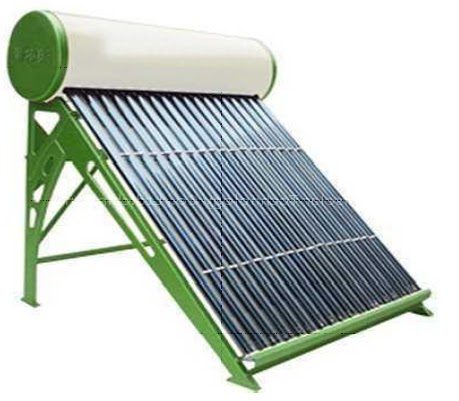
Solar water heaters—also called solar domestic hot water systems—can be a cost-effective way to generate hot water for your home. They can be used in any climate, and the fuel they use—sunshine—is free.

How It Works
Solar water heating systems include storage tanks and solar collectors. There are two types of solar water heating systems: active, which have circulating pumps and controls, and passive, which don't.
 
Most solar water heaters require a well-insulated storage tank.
Solar storage tanks have an additional outlet and inlet connected to and from the collector. In two-tank systems, the solar water heater preheats water before it enters the conventional water heater. In one-tank systems, the back-up heater is combined with the solar storage in one tank.
Solar water heating systems almost always require a backup system for cloudy days and times of increased demand. Conventional storage water heaters usually provide backup and may already be part of the solar system package. A backup system may also be part of the solar collector, such as rooftop tanks with thermosyphon systems. Since an integral-collector storage system already stores hot water in addition to collecting solar heat, it may be packaged with a demand (tankless or instantaneous) water heater for backup.  You can find more detailed information about the different types of tank systems here.
Passive Solar Heating  
If you are in the process of a new home construction, you can design it is such a way that the sun heats it entirely. This is known as passive solar heating. 
How It Works
Your home's windows, walls, and floors can be designed to collect, store, and distribute solar energy in the form of heat in the winter and reject solar heat in the summer. This is called passive solar design or climatic design. Unlike active solar heating systems, passive solar design doesn't involve the use of mechanical and electrical devices, such as pumps, fans, or electrical controls to move the solar heat.  Passive solar homes range from those heated almost entirely by the sun to those with south-facing windows that provide some fraction of the heating load. The difference between a passive solar home and a conventional home is design. The key is designing a passive solar home to best take advantage of your local climate.

The cost factor
Residential solar energy is not cheap. That said, it would be considered a very wise investment for your home.  Depending on where you live and how large your system is, it may take upwards of ten years for your panels to pay for themselves, but consider after that your energy is free.  This will only improve as solar technology becomes more efficient, cheaper, and more widely available.  Also consider the current state of your roof.  Might it need replacing? If so, you might be interested in solar roof tiles. Rather than replacing your existing roof tiles, you can get tiles that are themselves small solar panels.

Increasing the value of your home
Which house would you rather buy - the one with high fuel bills or the one which generates its own power?   Solar panels would increase the value of your home, as once they are installed they will be generating electricity.  A buyer would then expect much lower fuel costs, and that would be reflected in your home price.  The promise of low utility bills is an attractive one these days, and a residential solar power system would certainly make your home more attractive to buyers!

Why Solar?
When you choose solar energy, you:
  • Secure your energy independence and own your power! Lock in your electricity rates for 30 years — utility company rates have been steadily increasing by about 6.7% a year, with a 30% jump in the last three years alone.
  • Make a sound investment. The pre-tax IRR over 25 years in most cases averages around 15-25% — far better and far safer than the stock market, bond market, money markets, and long-term CDs.
  • Increase your home's value by $20 for every $1 reduction in annual utility bills, according to the National Appraisal Institute. And, your property tax won’t increase even one cent.
  • Become part of the renewable energy solution — the sun provides enough energy in one day to power the entire world for a whole year! It’s free, clean and renewable.

Many of the benefits of solar energy are obvious — it provides clean power without burning fossil fuels, electricity-generating costs are pegged to a low, fixed rate (or potentially eliminated) and power from solar panels is generated most efficiently at peak times (when electricity is needed most). But there are other benefits, too. A photovoltaic system is also a sound financial investment with very low risk, and increases the value of your home dramatically. It all adds up to good news for your electricity rates, your home equity and a greener economy.
It’s a win-win, no matter what moves you!

Monday, May 23, 2011

MOLD: What's the big deal, anyhow?


During this windy spring season, mold can be major component in making allergies unbearable!  Alternating wet and warm days, combined with leftover yard waste (leaves, clippings, fallen branches, etc.) make for an ideal mold food source.  Still worse than their ability to spark allergic reactions and asthma attacks, molds can cause many other health concerns ranging from temporary discomfort to long term, life-threatening diseases.

So why is mold so harmful, anyhow? 


Molds can be separated into three categories:

  • Opportunistic Pathogens (a parasitic organism that does not cause harm to it's host)
  • Exclusive Saprotrophs (an organism that only consumes non-living organic matter)
  • Aquatic Thermophiles (organisms that require warm temperatures to survive)
Molds differ from plants because they do not use photosynthesis to produce their food– mold must find a source of nourishment.  As it feeds on its host, mold works to break down whatever surface it is attached to.  For this reason, mold is beneficial to decaying processes, but when mold turns up in your house, it is important to address it immediately.  Though the mold growing on the grout in your bathroom may seem innocuous, its mere presence means that the only thing holding you tile in place is being slowly disintegrated!

Molds spread by tiny airborne spores, only need a tepid environment, moisture and a food source to germinate (which is why the average house is a perfect mold environment).  Some mold will produce toxins called mycotoxins in order to inhibit the growth of competitive organisms.  The problem with mycotoxins is that molds enjoy the same environments that people do, and because of this, the humans are exposed to more dangerous mycotoxins than they may realize.

It is nearly impossible to destroy mycotoxins– the digestive system cannot break them down and temperature treatments like heating them or freezing do not affect them.  This is why mycotoxins are one of the primary causes of food-borne illness.  Certain mycotoxins are considered to be the most potent carcinogens in existence.

 
 There are several ways in which mycotoxins affect the body:

  • Hypersensitivity - (an allergic response to molds and spores)
  • Mycotoxicosis - poisoning by food products contaminated by fungi
  • Mycetismus - the ingestion of preformed toxin (i.e. toadstool poisoning)
  • Infection (systemic) - (also known as Mycotoxicosis)

People with mycotoxicosis will have recently experienced at least 8 of the symptoms from this list):
• Headaches
• Anxiety/depression, heart palpitations - confusion, PTSD
• Extreme blood pressure, cholesterol, or triglycerides irregularities
• Ringing in ears, balance problems, dizziness
• Chronic fatigue
• Intermittent face flushing; almost always systemic (called the Mylar Flush)
• Numbness in face and limbs, intermittent twitching
• Night sweats and hot flashes (especially around the head)
• Multiple chemical sensitivity 
• Nose bleeds
• Bruising easily
• Respiratory distress, coughing, sneezing, sinusitis
• Difficulty swallowing, choking, spitting up (vomiting) mucous
• Fibromyalgia
• Hypersensitivity pneumonitis
• Burning in the throat and lungs (similar to acid reflux)
• Asthmatic signs; wheezing, shortness in breath, coughing, burning lungs, etc.
• Dirt-like taste in mouth, coated tongue
• Food allergies/leaky gut syndrome/altered immunity
• Memory loss; brain fog, slurred speech, sometimes leading to dementia
• Vision problems
• Swollen lymph nodes
• Large boils on neck (often a sign of anaphylaxis)
• Thyroid irregularities
• Rash or hives all over the skin (often systemic)
• Reproductive system; infertility, changes in menstrual cycles
• Sudden weight changes
• Hair loss
• Joint/muscle stiffness and pain
• Heart attack
• Seizures
• Inadvertent facial movements or extremity jerking
• Hypersensitivity when re-exposed to molds, which can lead to anaphylaxis
• Anaphylaxis upon re-exposure to mycotoxin producing molds

When in doubt as to what is mold and what is not, it’s always best to get the opinion of a professional mold remediation company.  If have a flooded area in your house that has been submerged for more than 24 hours or moldy area larger than two square feet, call a mold remediation company (it could be dangerous to clean this yourself in these two cases)!   

We at AJAX hope that this information has been helpful, and be sure to consult your physician should you feel as if you have any symptoms of mold exposure. Be safe, and stay healthy!

For more information visit www.epa.gov/mold/moldguide.html

Thursday, March 3, 2011

• AJAX is now an EXCLUSIVE ADT Security Vendor!•

Great news!
Ask your AJAX Inspector how through our
exclusive affiliation with ADT Security Services,
you can receive:   
FREE*  STANDARD INSTALLATION -worth $350
FREE* Activation - of a non-ADT Security system already installed in your home!
 ADT always there tm
 
 
 *See here for more details, or call 
AJAXHomeInspections at 916-932-6631


Monday, January 24, 2011

Follow us, and we'll help!

Follow our blog to find out the latest developements in home repair, maintanence, real estate industry developments, and all those little tips and tricks that every homeowner wishes they knew. 

Rest easy..., AJAX is here for you!